 Busy Man
Last Updated: November 5, 2026
Quick Summary
To prevent soil erosion from runoff, keep soil covered with mulch, grass, or ground cover, plant deep-rooted vegetation, and spread water out with a level spreader or shallow swale. Contour the slope and add structure such as a diversion channel, perforated pipe, or gravel trench that moves water to a safe outlet.
- Runoff is water that can't soak in, so it flows downhill and takes topsoil with it.
- Walk the property after rain and note where water pools, cuts channels, and leaves the yard.
- Clear gutters and extend downspouts 1.2 to 1.8 metres from the foundation.
- Break a hill into shorter runs with swales, contour planting, and terracing.
- Every swale or ditch needs a planned outlet so redirected water doesn't pool against a foundation.
Table of Contents
- 5 Ways to Prevent Soil Erosion From Runoff
- How to Stop Water Runoff in Your Yard
- How to Slow Water Runoff on a Hill
- Frequently Asked Questions
5 Ways to Prevent Soil Erosion From Runoff
Learning how to prevent soil erosion from runoff starts with slowing water before it picks up speed. Bare soil, a hard slope, and one heavy rain can carve a channel quickly.
Runoff is water that can't soak in, so it flows downhill and takes topsoil with it. Five fixes handle most of it:
- Keep soil covered. Mulch, grass, or ground cover absorbs raindrop impact.
- Plant deep-rooted vegetation. Roots hold soil and open infiltration paths.
- Spread water out. A level spreader or shallow swale stops runoff concentrating.
- Contour the slope. Grade and plant across the hill, not up and down it.
- Add structure where needed. A diversion channel, perforated pipe, or gravel trench moves water to a safe outlet.
Watch out: redirecting water without a planned outlet just moves the erosion to your neighbor's lot or your foundation.
Five fixes handle most runoff problems, each aimed at slowing water before it picks up speed.
| Fix | What to do |
|---|---|
| Keep soil covered | Mulch, grass, or ground cover absorbs raindrop impact |
| Plant deep-rooted vegetation | Roots hold soil and open infiltration paths |
| Spread water out | Level spreader or shallow swale stops runoff concentrating |
| Contour the slope | Grade and plant across the hill, not up and down |
| Add structure where needed | Diversion channel, perforated pipe, or gravel trench to safe outlet |
How to Stop Water Runoff in Your Yard
To stop water runoff in your yard, fix low spots and bare patches first, then guide the rest to a safe place. Most problems come from compacted soil, clogged gutters, and downspouts dumping water against the house.
Walk the property after rain and note where water pools, cuts channels, and leaves the yard.
- Clear gutters and extend downspouts 1.2 to 1.8 metres from the foundation
- Mulch bare soil to prevent soil erosion before the next storm
- Seed thin grass and add ground cover on slopes
- Check that driveways and patios drain away from the house
- Fill low spots with topsoil and compact lightly
For a deeper walkthrough, see our guide on how to fix drainage on property. If grading is the problem, our team handles grading, trenching, and waterway work.
How to Slow Water Runoff on a Hill
Slowing runoff on a hill means breaking the slope into shorter runs so water loses energy before the bottom. A long, smooth slope is worst: water accelerates, concentrates, and cuts a gully.
Three tools work well on slopes:
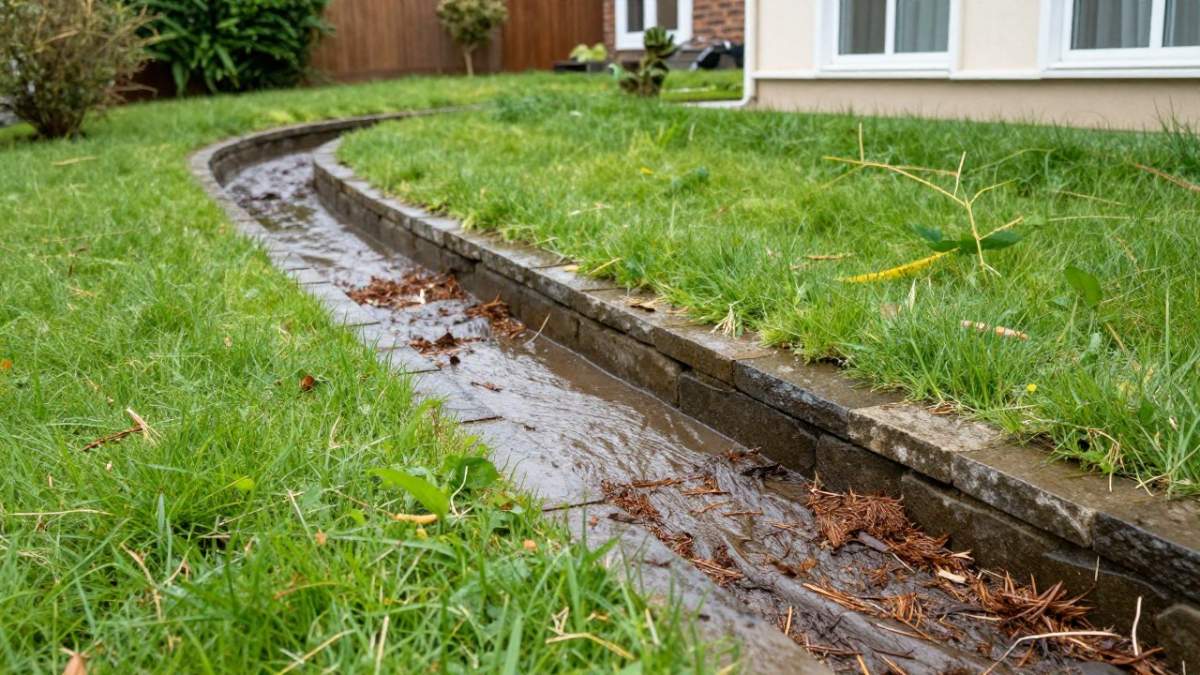
- Swales: shallow, level channels that catch water and let it soak in
- Contour planting: rows of shrubs or grasses across the slope
- Terracing: small steps that shorten the run and trap sediment
Every swale or ditch needs a planned outlet, ideally a vegetated buffer or stable waterway, so redirected water doesn't pool against a foundation or wash out a driveway.
If the slope needs machine work, our guide on choosing a trenching service for drainage covers what to ask before hiring. For the grading itself, read what to know before hiring a grading contractor.
Frequently Asked Questions
What are 5 ways to prevent soil erosion?
Five practical methods are: keep soil covered with vegetation or mulch, plant deep-rooted grasses and shrubs, use cover crops like winter rye on bare ground, redirect runoff with swales or diversion channels, and avoid leaving soil bare after grading. Each method addresses a different part of the problem, so combining two or three works better than relying on one. For sloped yards, pair vegetation with a shallow drainage channel to slow water before it concentrates.
Can I put mulch down to stop erosion?
Yes. A 2 to 4 inch layer of mulch absorbs raindrop impact, slows surface runoff, and holds topsoil in place while plants establish. It works best on beds, around newly planted trees, and on bare patches after grading. Reapply mulch each spring because it breaks down over time. On steep slopes, pair mulch with landscape fabric or a shallow trench to keep it from washing away during heavy storms.
How do I stop runoff on my sloped yard?
Start by checking where water enters and exits the slope. A shallow swale or diversion channel across the slope slows water and directs it to a safe outlet like a gravel-filled trench or a vegetated buffer. Plant deep-rooted grasses and shrubs along the contour to hold soil. If the slope is steep or the runoff is concentrated, a contractor can reshape the grade and install a perforated pipe or drainage channel so water moves away from the foundation instead of across bare soil.
Runoff problems rarely fix themselves, and every storm before the work is done costs you more topsoil. Busy Man Contracting LLC shapes grades, cuts trenches, and builds waterways that send water where it belongs, using site-specific planning and Bobcat equipment suited to tight residential and commercial lots. Get started with Busy Man Contracting LLC and put your ground back in working order before the next heavy rain.
